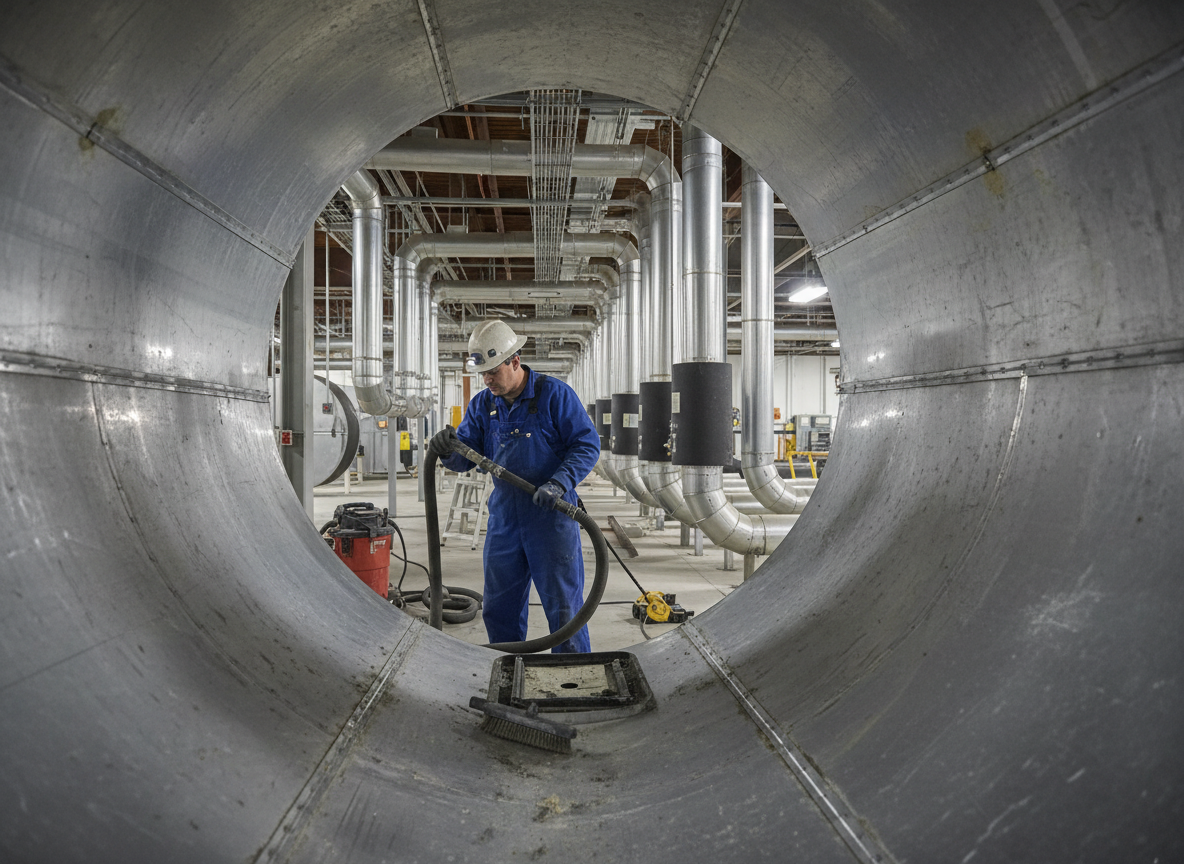
Milwaukie homes built before the 1980s in neighborhoods like Ardenwald and Hector Campbell often have original galvanized duct runs that collect condensation during the long wet winters. Moisture from the nearby Willamette River combines with indoor humidity to create conditions where mold and rust form inside supply lines, especially in crawlspaces that stay damp from Clackamas County soil. Routine maintenance includes checking for these hidden corrosion spots and sealing joints that leak conditioned air into unconditioned attics common on the east side of town.
Dry summers bring a different problem: fine dust from the surrounding terrain settles into return-air pathways and reduces airflow through older furnaces still in use across Downtown Milwaukie. Technicians measure static pressure at multiple points along the duct system rather than relying on a single filter reading, because many Island Station properties have undersized returns added during piecemeal remodels. Cleaning focuses on removing this dust without disturbing asbestos-wrapped sections found in some pre-1970 homes.
Code requirements in Clackamas County now call for balanced ventilation when systems are altered, so maintenance visits include verifying that bath and kitchen exhausts still pull the correct cubic feet per minute. Technicians also inspect makeup-air pathways that can be blocked by insulation upgrades common after Portland energy programs reached Milwaukie. These checks prevent negative pressure that pulls river moisture or crawlspace odors back into living spaces during the next wet season.
Technician insight
In Milwaukie, the thing that catches most people out with ventilation system maintenance is how river humidity during our mild wet winters accelerates rust inside the original galvanized ducts found in Ardenwald and Island Station homes. Homeowners often replace filters religiously but miss the slow airflow drop from corroded joints until the furnace struggles in summer. Checking static pressure across the full run instead of just at the unit reveals the real restriction every time.
Blocked Returns in Hector Campbell
A Hector Campbell homeowner reported weak airflow on the second floor during the first warm spell. Inspection showed return ducts partially collapsed where they crossed the crawlspace, allowing river moisture to rust the metal over several winters. We replaced the damaged sections with insulated rigid duct, resealed all joints, and restored proper airflow without needing full system replacement.
How it works
- 1
Initial System Assessment
Map all supply and return runs in the home while noting duct material, insulation condition, and any visible moisture staining from Milwaukie winters.
- 2
Airflow and Pressure Testing
Measure static pressure and CFM at multiple points to identify restrictions caused by dust or collapsed flex runs common in older Clackamas County houses.
- 3
Targeted Cleaning and Sealing
Remove accumulated dust and seal joints using mastic appropriate for the area's humidity swings, avoiding disruption to any legacy insulation.
- 4
Exhaust and Makeup-Air Verification
Confirm bath and kitchen fans meet current code and clear any blockages that could create negative pressure during wet months.
- 5
Final Documentation and Recommendations
Provide a written summary of findings with photos and note any seasonal adjustments needed before the next dry summer or wet winter cycle.
Pricing
Cost depends on system size, number of stories, and condition of existing ductwork; we provide an upfront quote after the assessment.