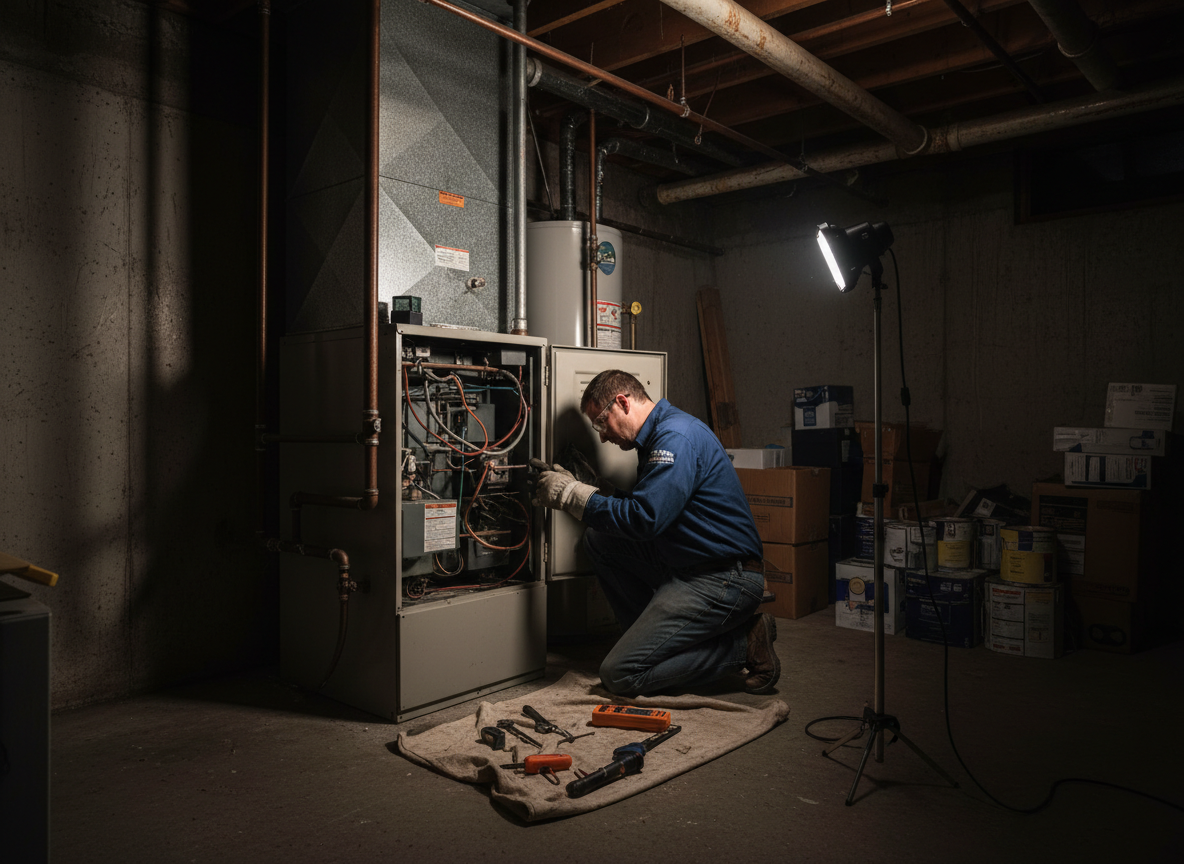
Milwaukie homes built before the 1980s in neighborhoods like Ardenwald and Hector Campbell often have forced-air furnaces or heat pumps that struggle once winter rains begin. Moisture from the Willamette River corridor seeps into crawl spaces and attics, accelerating rust on heat exchangers and condensate drains. Technicians here routinely find clogged secondary drains and failed limit switches that trip repeatedly during the long damp season.
When a system in Downtown Milwaukie or Island Station stops producing heat, the first step is confirming whether the issue is electrical, gas, or airflow-related. Many older homes still use 80% efficient furnaces that were never upgraded when Portland-area codes tightened on venting. Skipping a proper combustion analysis can leave carbon monoxide risks unaddressed, especially in tightly sealed post-2000 builds near Milwaukie Riverfront Park.
Warm dry summers allow dust to accumulate inside blower compartments, but the real stress arrives with November rains. Homeowners in Clackamas County frequently notice short cycling after the first cold snap because filters loaded with cottonwood and pollen restrict airflow. Addressing the filter and cleaning the evaporator coil usually restores even temperatures before the next storm front moves in from the coast.
Seasonal Heating Checks
Before wet weather arrives, inspect condensate lines for algae growth common in Milwaukie’s mild climate and verify that outdoor units in Island Station yards have clear drainage to avoid ice dams around the compressor.
Technician insight
In Milwaukie the thing that catches most people out with heating repair is how quickly river humidity rusts out the secondary heat exchanger on 1990s furnaces in Ardenwald crawl spaces. Homeowners change the filter but never look at the condensate trap until the unit shuts down during the first cold rain.
Ardenwald Furnace Shutdown
A 1978 home near the Milwaukie Museum lost heat after three days of steady rain. Inspection showed the condensate drain blocked by river-area algae, tripping the safety switch. The trap was cleared and the line rerouted with a proper slope; the furnace resumed steady operation without further short cycling.
How it works
- 1
Initial Assessment
Technician arrives and checks thermostat, power supply, and error codes while noting the home’s age and location relative to the Willamette River.
- 2
System Diagnosis
Full combustion and airflow testing identifies whether the problem is the igniter, limit switch, or clogged drain typical after weeks of rain.
- 3
Repair Execution
Parts are replaced or cleaned on site, with attention to venting clearances required in older Ardenwald and Hector Campbell homes.
- 4
Testing and Walkthrough
System is run through multiple cycles and the homeowner is shown filter location and proper maintenance steps for Clackamas County winters.
Pricing
Upfront quote provided after inspection; no hidden trip fees for 24/7 calls.