Milwaukie homes built before the 1980s in Ardenwald and Hector Campbell often have single-stage furnaces and R-11 insulation that struggle once winter rains push humidity above 80 percent. Condensate lines clog with river-influenced moisture, causing safety switches to trip and short-cycling that wears out blowers. Technicians here carry extra condensate pumps and UV lights because standard drain lines fail faster near the Willamette River than in drier east-county neighborhoods.
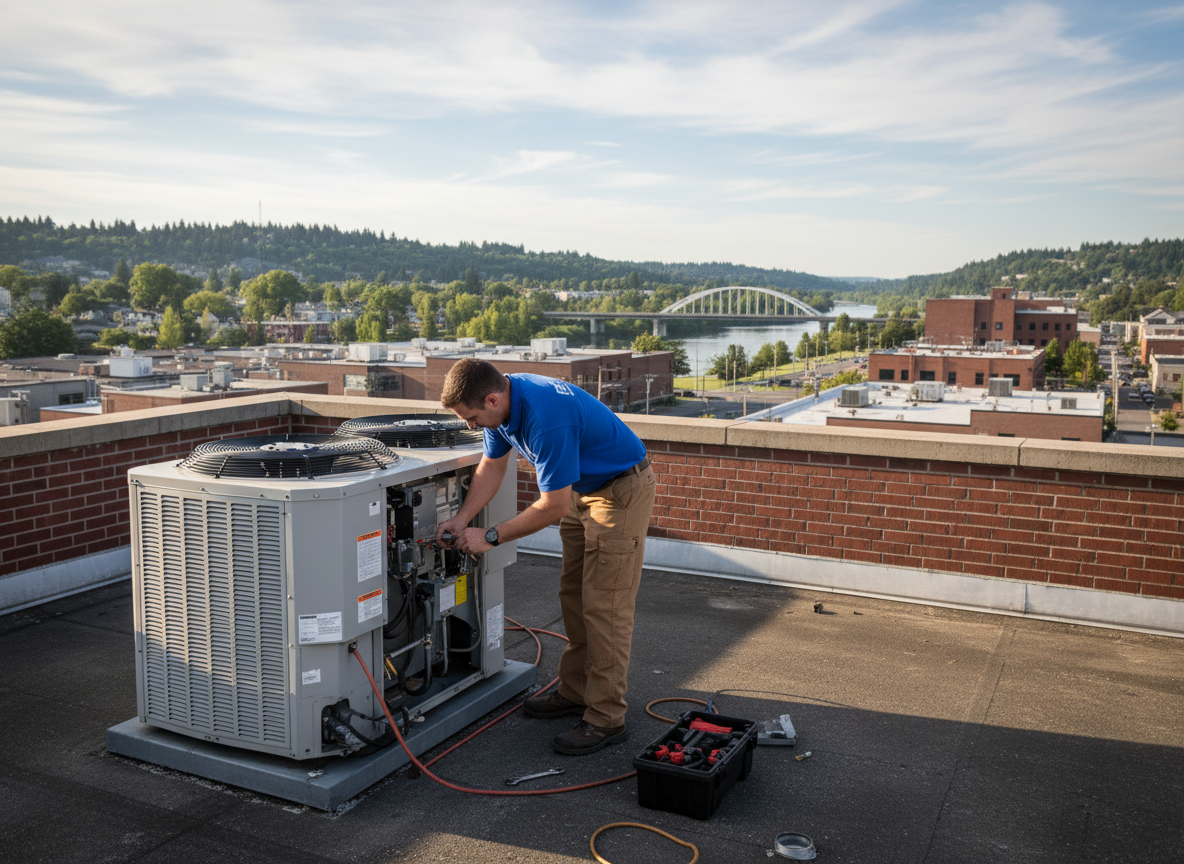
Summer heat loads in Island Station and Downtown Milwaukie spike quickly when temperatures climb into the low 90s with low humidity. Older packaged units on rooftops collect pollen and cottonwood fluff that blocks coils, dropping efficiency and raising indoor humidity. Repair calls frequently involve cleaning TXV valves and checking capacitor ratings because voltage fluctuations from Portland’s grid affect start windings more than newer variable-speed equipment.
Clackamas County code requires combustion-air calculations on any furnace repair that touches the venting system. In Milwaukie’s older stock, many basements lack dedicated intakes, so techs must add combustion-air ducts or risk CO issues during the first wet cold snap. Carrying spare PVC and proper termination caps prevents return trips when inspectors flag incomplete work.
Technician insight
In Milwaukie, the thing that catches most people out with Local HVAC repair is how the mild wet winters interact with older ductwork in Ardenwald and Island Station homes. River humidity gets pulled into unsealed returns and saturates filters within weeks, triggering high-limit trips that homeowners mistake for a failing furnace. We always pull the filter and check the return plenum first because that single step changes the entire repair plan.
Condensate Failure in Hector Campbell
Homeowner reported short-cycling on a 25-year-old furnace during the first cold rain. Inspection showed the condensate trap clogged with silt from nearby Willamette River air infiltration. Cleared the line, replaced the safety switch, and added a UV light to reduce future growth. System completed a full heat cycle without interruption.
How it works
- 1
Initial Assessment
Arrive on site, verify system operation, and document error codes or airflow readings.
- 2
Diagnostic Testing
Check electrical components, refrigerant pressures, and condensate drainage specific to local humidity.
- 3
Repair Execution
Replace or clean failed parts while confirming combustion air meets county requirements.
- 4
System Verification
Run full cycle test, measure temperature split, and confirm safe operation before leaving.
Pricing
Upfront quotes provided before any repair work begins.