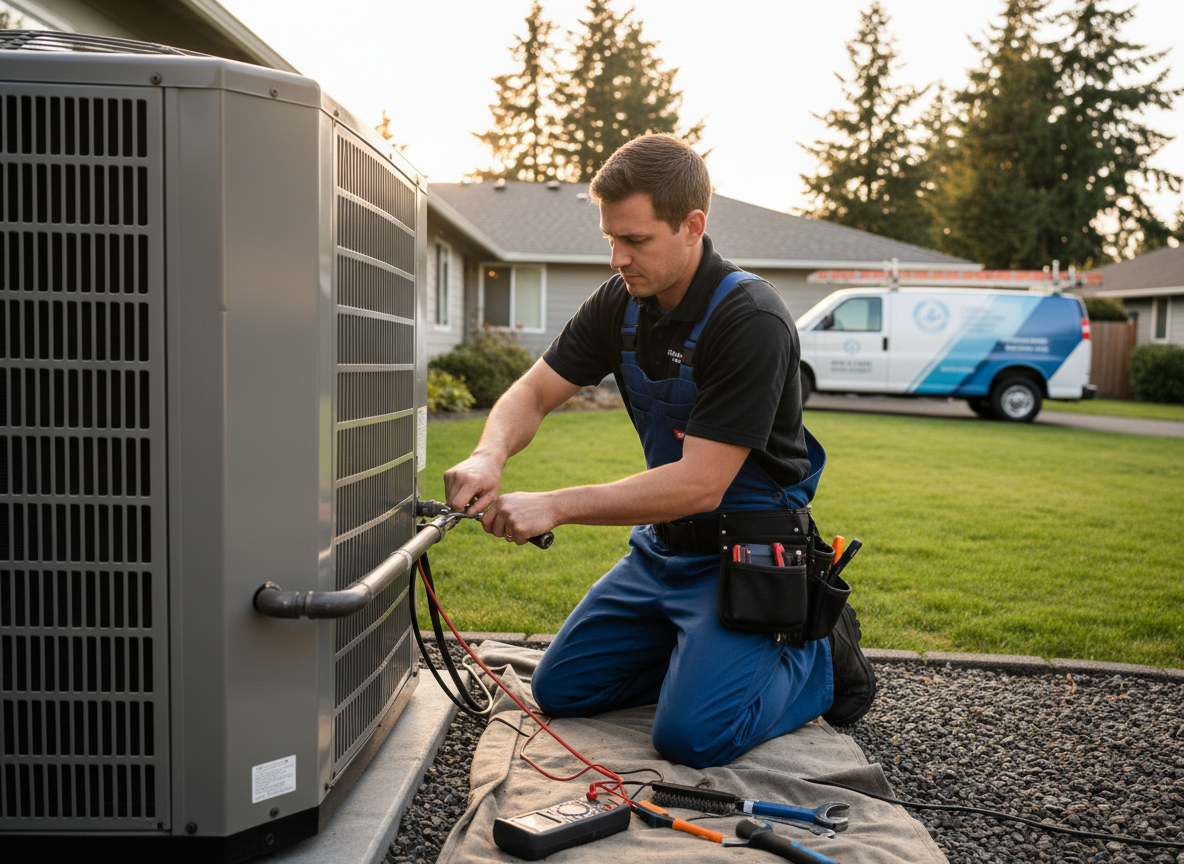
Milwaukie homes in neighborhoods like Ardenwald and Hector Campbell often feature older ductwork and single-stage systems that struggle when winter rains drive constant humidity into attics and crawl spaces. Moisture accelerates corrosion on heat exchangers and evaporator coils, especially in properties close to the Willamette River where soil moisture stays elevated year-round. Technicians must check for hidden condensate drain clogs that allow water to back up into furnaces, a common failure point after prolonged wet periods that Portland-area homes experience.
During warm dry summers, systems serving Island Station and Downtown Milwaukie run extended cycles that expose weak capacitors and worn contactors before they fail outright. Repair calls frequently reveal undersized returns in mid-century housing stock that restrict airflow once temperatures climb, forcing compressors to work harder. Proper diagnosis includes static pressure readings and combustion analysis rather than simple part swaps, because local code in Clackamas County requires documented safety checks on gas appliances after any heat-side repair.
Technicians arriving for HVAC repair near me routinely find that homeowners have attempted DIY filter changes that leave debris in the blower housing, shortening motor life. Addressing these issues on the first visit prevents repeat calls when the next weather shift hits. Work always includes verifying proper refrigerant charge and airflow across the entire system rather than isolating the reported symptom.
Technician insight
In Milwaukie, the thing that catches most people out with HVAC repair near me is how our mild wet winters push moisture into older crawl spaces and attics in Ardenwald homes, corroding heat exchangers that look fine from the outside until a cold snap arrives.
No-Heat Call in Hector Campbell
Homeowner reported sudden furnace shutdown during a wet spell. Inspection found a clogged condensate drain allowing water to reach the limit switch. Cleared the line, replaced the switch, and verified proper drainage. System restored heat without further issues.
How it works
- 1
Initial Assessment
Arrive on site and review system operation while noting age of equipment and visible duct conditions typical in Clackamas County homes.
- 2
Diagnostic Testing
Perform electrical, pressure, and combustion tests to isolate the fault without guessing, especially important after wet winters.
- 3
Repair Execution
Replace or adjust the faulty component and retest the full system to confirm restored performance.
- 4
Final Verification
Document readings and explain any ongoing maintenance needs created by local weather patterns.
Pricing
Upfront quotes provided before any repair work begins.