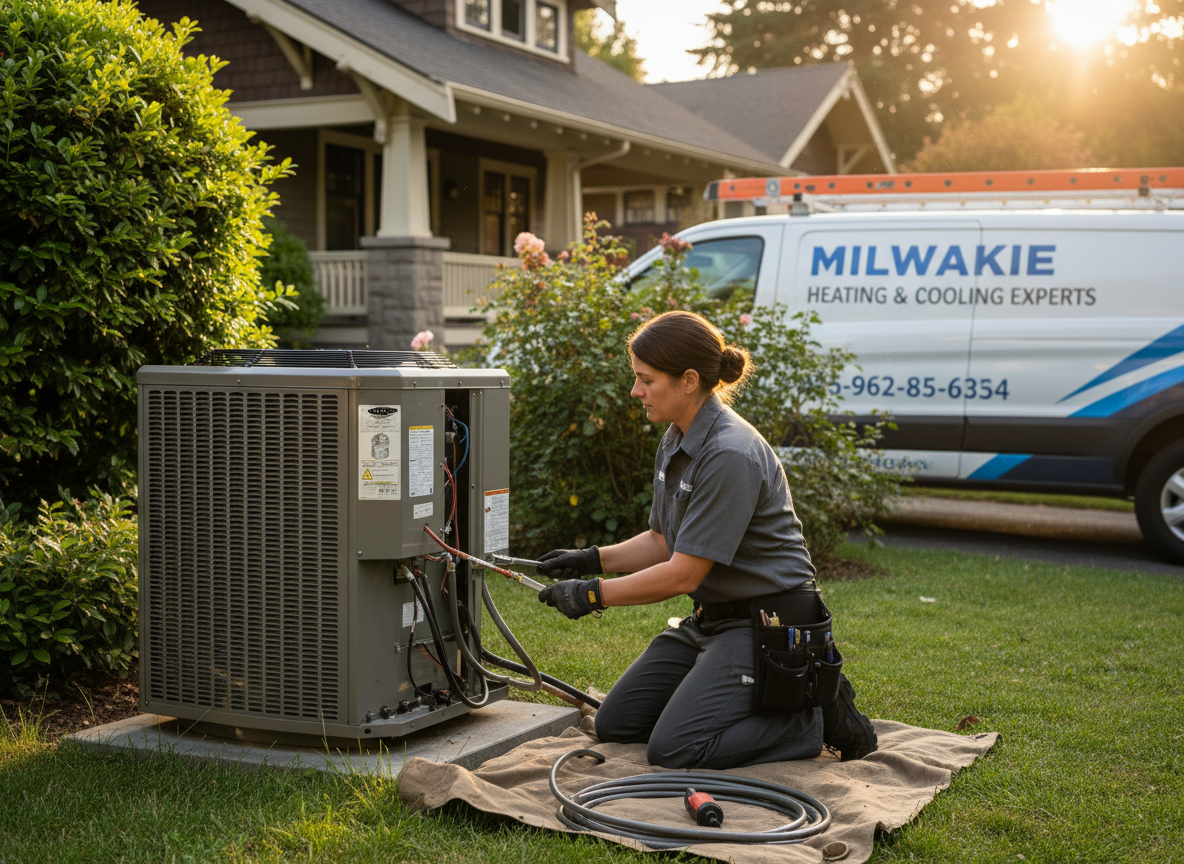
Milwaukie homes built before 1980 in neighborhoods like Hector Campbell and Ardenwald often have original ductwork that leaks in the mild wet winters when humidity spikes along the Willamette River. These older systems struggle to maintain even temperatures once summer heat arrives, especially in single-story ranch houses common near Milwaukie Riverfront Park. Proper sizing matters here because river-adjacent properties retain more moisture, forcing equipment to work harder against both heat and latent load.
Clackamas County building codes require specific combustion air and venting details that newer installations must meet, particularly in tight homes near Portland where retrofits are frequent. Technicians routinely find undersized returns in Island Station properties that cause short cycling during shoulder seasons. Addressing these requires checking static pressure and airflow rather than simply swapping units, because river valley air can carry extra particulates that clog filters faster than inland locations.
Seasonal swings from cool damp winters to warm dry summers mean Milwaukie systems need both reliable heating capacity and dehumidification during shoulder months. Homes along SE International Way and surrounding commercial edges often share utility corridors that limit outdoor unit placement, so placement and condensate routing become critical to avoid callbacks when heavy rains return.
Technician insight
In Milwaukie the thing that catches most people out with heating and cooling near me is how often pre-1970 homes in Ardenwald and Island Station have returns that are too small for the added summer humidity coming off the Willamette. Homeowners assume a new unit will fix uneven temperatures, but without addressing the return path the system still short cycles once the dry season ends and moisture loads return.
Uneven Temperatures in Ardenwald Home
A 1965 ranch in Ardenwald showed large temperature swings between the main floor and basement during shoulder seasons. Inspection found collapsed flex duct near the Willamette River floodplain and an undersized return. We replaced the damaged sections, added a properly sized return, and balanced dampers. The home now holds steady temperatures without short cycling.
How it works
- 1
Initial Assessment
Technician arrives at the Milwaukie address and inspects existing equipment, ductwork, and thermostat placement while noting home age and orientation relative to the Willamette River.
- 2
Load and Airflow Check
Measure static pressure and temperature differentials to identify leaks or restrictions common in older Ardenwald and Hector Campbell homes before recommending repairs or replacements.
- 3
Solution and Quote
Provide clear options with upfront pricing based on the inspection, including any code updates needed for Clackamas County compliance.
- 4
Installation or Repair
Complete work with attention to condensate drainage and airflow adjustments suited to local humidity patterns, then test under both heating and cooling modes.
- 5
Final Walkthrough
Review settings with the homeowner and leave maintenance guidance specific to Milwaukie weather cycles.
Pricing
Upfront quotes provided after on-site inspection; costs vary by home age, duct condition, and equipment access in river-adjacent neighborhoods.