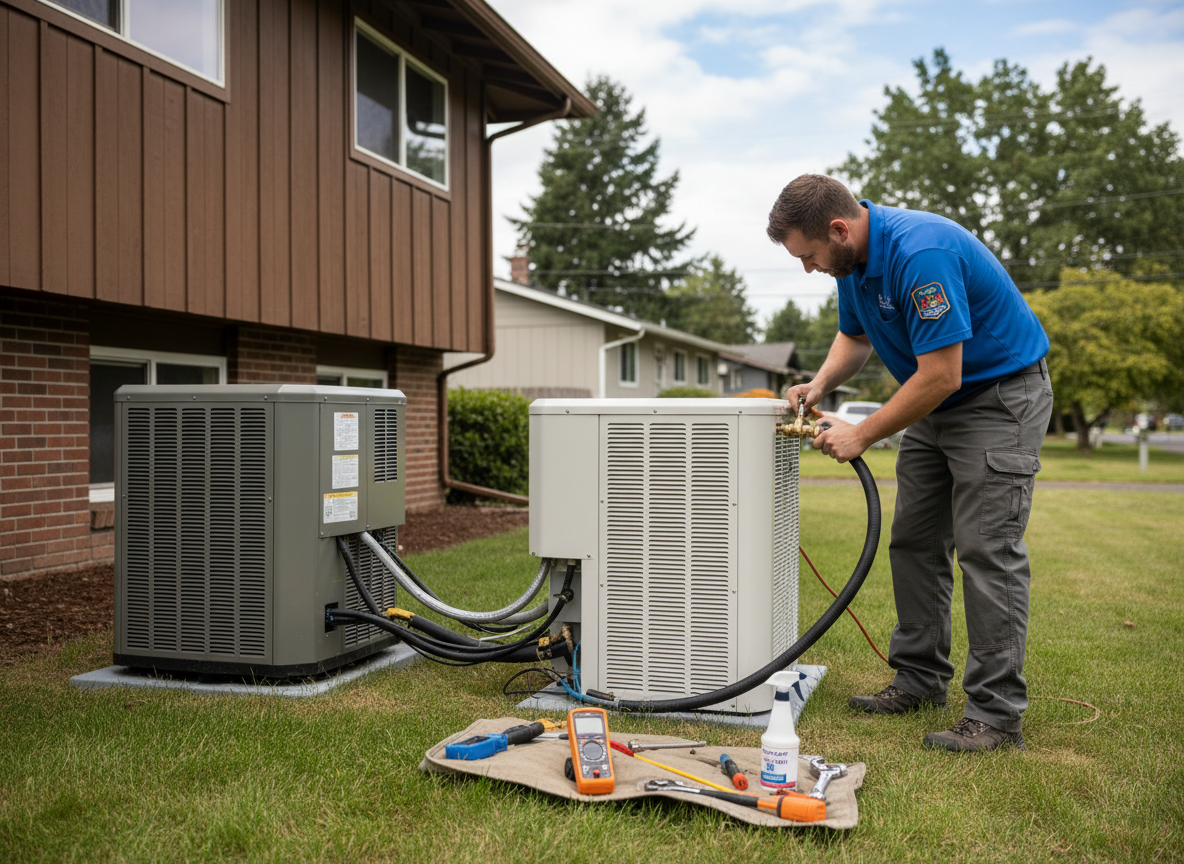
Milwaukie homes in neighborhoods such as Downtown Milwaukie and Hector Campbell often date back decades, with original ductwork sized for smaller cooling loads before central air became standard. Warm dry summers push older units hard, while mild wet winters encourage moisture buildup in coils and drains that shortens equipment life. Replacing an air conditioner here requires checking attic insulation levels and return air paths that river humidity from the Willamette can affect over time.
Clackamas County permitting rules for new equipment emphasize proper refrigerant line sizing and condensate drainage to avoid water intrusion in crawl spaces common along the riverfront. In Ardenwald and Island Station, many single-story ranch homes sit on sloped lots where outdoor units must be leveled precisely to maintain warranty performance. Technicians routinely find mismatched indoor coils from previous quick swaps that reduce efficiency and increase operating costs during peak summer loads.
ThermalBridge Comfort starts every replacement by measuring static pressure across existing duct runs rather than assuming original design matches today’s higher-efficiency equipment. This step catches restrictions created by decades of dust and pet hair common in older Milwaukie housing stock. Proper commissioning after install includes verifying temperature split at the registers and confirming the new thermostat communicates correctly with the air handler in homes that lack modern wiring.
Handling River Humidity During Replacement
In Milwaukie properties near the Willamette, extra attention goes to sealing return plenums and adding UV lights when replacing air conditioners to limit mold growth triggered by mild wet winters. This prevents callbacks once warm dry summers arrive and systems run continuously.
Technician insight
In Milwaukie, the thing that catches most people out with air conditioner replacement is undersized return ducts in 1950s-1970s homes in Ardenwald and Hector Campbell. The original builders never planned for central cooling, so we often have to enlarge the return or add a second one before the new high-efficiency unit will perform without freezing the coil during warm dry summers.
Island Station Ranch Home
Homeowner called after the existing unit stopped cooling during a warm stretch. We found the indoor coil was mismatched and the return was pulling from a damp crawl space near the river. Replaced the full system, enlarged the return, and added a condensate safety switch. The new unit now maintains even temperatures without short cycling.
How it works
- 1
Site Assessment
Measure existing duct static pressure, check coil match, and review attic access in Milwaukie homes.
- 2
Old Unit Removal
Safely recover refrigerant and disconnect lines while protecting landscaping around outdoor pads in Clackamas County yards.
- 3
New Equipment Install
Set level pad, run new lineset, and connect to existing or upgraded ductwork for proper airflow.
- 4
Testing and Commissioning
Verify temperature split, drain function, and thermostat operation before leaving the job.
Pricing
Cost depends on unit efficiency, duct modifications, and access conditions; upfront quotes provided after assessment.